Monday, June 20, 2016

Stem Cell Transplant Then

Two Years Ago

Sam flies back to Utah the day after David’s transplant, after we have watched the anticlimactic delivery of his stem cells via IV to David. Sam has a job for the summer with a small startup company. R’el graduates from her psychiatry residency at the University of Connecticut Medical Center in Farmington, just west of Hartford. We attend a wedding reception for Ryan and Mie at the Old Manse, which Nathaniel Hawthorne and his new bride Sophia Amelia Peabody rented when they were first married in 1842.

Day One, Day Two, Day Three of the hundred day post-transplant quarantine. I become a “Kitchen Nazi”. I decline offers of meals from loving friends. I focus a lot of energy on keeping the kitchen clean and the food safe, measuring the temperature of all meat (even cold cuts) and cooked food (165° or above), soaking the washed dishes in bleach, and spraying down the kitchen counters with a bleach solution frequently. It’s what I can do to combat the helplessness.

2016

The wedding of Annie and Shawn, which I announced in last week’s post, happens in the Provo City Center Temple. My wedding hope for them is expressed by the letter Nathaniel Hawthorne wrote to his sister Louisa, shortly after he and Sophia married:

“We are as happy as people can be, without making themselves ridiculous, and might be even happier; but, as a matter of taste, we choose to stop short at this point.” A year later, Nathaniel writes to his wife, Sophia, “We were never so happy as now—never such wide capacity for happiness, yet overflowing with all that the day and every moment brings to us. Methinks this birth-day of our married life is like a cape, which we have now doubled and find a more infinite ocean of love stretching out before us.”

Two days after Annie’s and Shawn’s wedding Jim drops me off at the Salt Lake City Amtrak train tracks at 10 p.m. I wander around, looking for the promised waiting area, and finally stop in at the Greyhound bus station, where a security guard directs me to the small Amtrak waiting room.

The California Zephyr is two hours late. At 2 a.m. I board and settle into my seat, which is a lot roomier than economy airplane seats. No one sits next to me, so I can spread out a little. I sleep about five hours, waking up several times. When I wake up the sun is well up; my sleep mask is very effective. A group of Mennonites are behind me in the coach car; they speak a language that sounds Scandinavian. At Winnemucca, Nevada, I have time to step out on the platform; a Mennonite woman and man run to the end of the long, concrete platform. The conductor is annoyed, thinking they will delay the train. Nearly half the passengers on the platform smoke. Back on the train many of the passengers sleep through the stop. I spend several hours in the observation car and hear the story of the ill-fated Donner party as we pass Donner Lake in the Sierra Nevada Mountains.


We arrive in Sacramento, California, around 4:30 p.m., about two hours late. I cut across a parking lot to get to Old Sacramento. I trip over a parking berm and cut my chin and scrape my knees—blood everywhere. Dazed, I stumble into a restaurant and a helpful bartender  rescues me with a bunch of paper napkins to staunch the bleeding. I wander the wooden sidewalks, past shops of old-time photographers, ice cream shops and tattoo parlors, and a riverboat dock, all the while firmly pressing the napkins to my chin. The man at the hot dog storefront notices my plight and offers two small bandaids. Then I walk to the California state capitol and enjoy the botanical garden.


At 1 a.m. I board the Seattle-bound Coast Starlight.


Next morning I head to the observation car at 7:00 a.m. I spend the day typing on my laptop and listening to a naturalist and a historian narrate our trip through Oregon and Washington. We stop on a siding in front of a bog and watch yellow-headed blackbirds dart among the rushes as a freight train passes us. Crater Lake is too far away to see, but there is fresh snow on the evergreens as we pass over the Cascade Mountains, which is delightful.

We arrive in Seattle an hour early and I take my first Uber ride, to my college friend’s, Kathleen’s, house. We talk late into the evening, as the room slowly darkens; we bask in our renewed friendship in the dusk, which lingers past 10 p.m.

Thursday, June 9, 2016

Wedding Plans

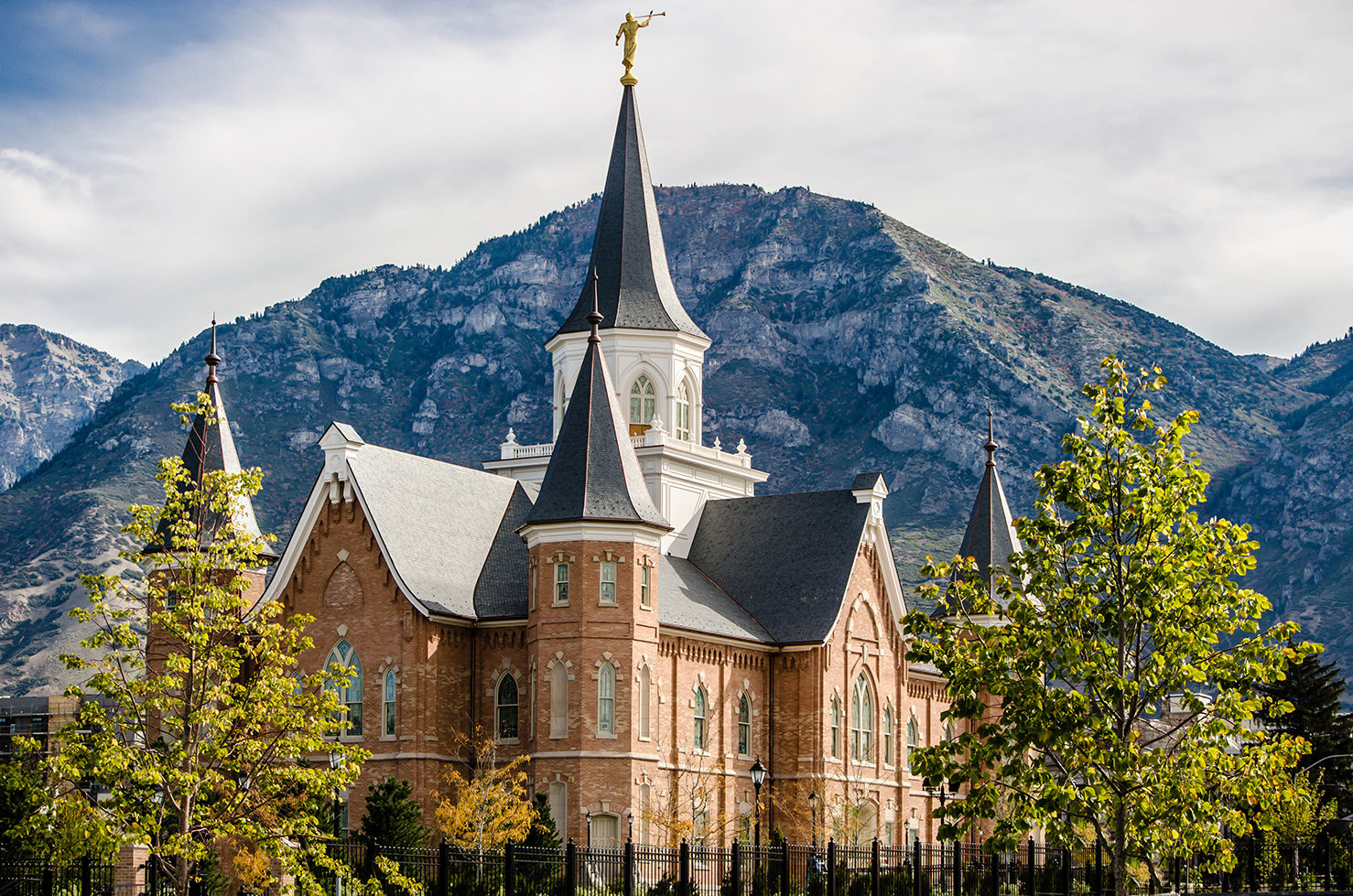
Our daughter Annie is getting married tomorrow in the Provo City Center Temple in Utah.

            In December 2010, a fire destroyed all but the outer walls of the historic Provo Tabernacle.


The temple was constructed inside those walls and dedicated on March 20, 2016. Annie and Shawn will be married there less than three months later.                            

Jim’s cousin, Mark, and his wife, Lynne, are generously hosting us and helping tremendously with the preparations and reception, which will be at the Springville Art Museum. Cyrus Dallin, who sculpted the Angel Moroni on the main steeple of the Salt Lake City Temple as well as Appeal to the Great Spirit in front of the Boston Museum of Fine Art, was born and raised in Springville, Utah, south of Salt Lake City. Dallin spent his adult life in Arlington, MA, where he had a sculpture studio. We live about 4 miles away, both from his studio and the replica Angel Moroni statue on the Boston Temple.

Two years ago

The first week in June, 2014, our son Sam, a 10-out-of-10 HLA (Human Leukocyte Antigen) match and therefore David’s stem cell donor, takes a few days off work in Utah and spends them at Mass. General as they harvest stem cells. The procedure is much like a platelet donation: Sam sits quietly while a needle in a vein in his arm removes his whole blood. A machine separates out the stem cells (which can mature into any type of blood cell), and then Sam’s blood, sans stem cells, is returned into a vein in his other arm. They freeze the cells, to preserve them before the transplant. After the procedure, we meet for lunch at the food court at Mass. General.

The results of an echocardiogram explain why David walks slowly and bent over: he has the heart of an 80-year-old cardiology patient: the chemo drug, daunirubicin, damaged his heart badly. In addition, he could have died from the C-diff (clostridium difficile) infection he contracted in the hospital. As it was, he had emergency surgery to remove his large intestine. Clearly hospitals are dangerous places for him.

So, when his transplant doctor, Dr. Yi-Bin Chen, asks David if he’d like to go home the day after the transplant, of course David lights up. After my initial elation, I’m more subdued: coming right home feel like the booby prize. They won’t administer radiation or more chemo to eradicate most of the leukemic cells before the transplant, as is the standard procedure. That treatment might just kill him. And since he won’t be badly weakened by any additional chemo and radiation, he can immediately go home, a much safer place than the hospital has been for him. There are no easy decisions.

Wednesday, June 1, 2016

Memorial Days

Memorial Day Weekend 2016
We spend four days in Charleston, South Carolina, visiting Jim’s sister’s family (John and Mary, Sierra and Jenna) and taking in the Spoleto USA Music Festival while getting to know Charleston with its charming 'single houses' with side porch piazzas, its bay views, and its picturesque streets.


The first landmark driving into Charleston is the airport exit sign, which reminds us both that the last time we saw David healthy was when we dropped him off at said airport on January 2, 2014, after a post-Christmas visit to John and Mary. At the curb Jim signed David’s copy of the Family Letters 2006-2011 book Jim wrote. Just a prosaic airport drop-off. David was headed back to Fort Hood Army Base in Texas. I didn’t know I was supposed to watch him carefully, soak in that last bit of Army -Medic health.
We soak up three days of concerts and theater in downtown Charleston: modern dance, chamber music, orchestra, choir, and The Importance of Being Earnest. Monday we walk about a mile to a Westminster Choir concert at the Cathedral of St. Luke and St. Paul. On the way back to downtown it rains and I walk under a large colorful umbrella. Stopped at a traffic light, a man taps my arm and points down at the puddley sidewalk. A small American flag on a stick lies abandoned on the ground. I don’t know if he thinks I had carelessly dropped it, but out of respect I pick it up: my private Memorial Day observance. I hadn’t planned ahead to decorate David’s grave, but that evening our Bishop emails a picture of his thoughtful observance:


Memorial Day Weekend 2014
Four days after I pack my carry-on bag and camp out in David’s hospital room, we're medevacked to Hanscom Airport near Boston (and four miles from our house). After the excitement of the leukemia remission news and the dramatic airlift, we discover that the doctors at MGH (Massachusetts General Hospital) have no intention of doing anything over the Memorial Day weekend. It's a let-down.
But the important thing is that David is home and on his way towards a bone marrow transplant.

Tuesday, May 24, 2016

Five Springs 2014

May 24, 2016

Yes, many days are easier than six months ago or even three months ago. Matt runs his 27th marathon in New Paltz, NY. Peter also runs a marathon; R’el and Xiomara run half marathons; I walk a half. Jim lets the little ones sleep in (race starts at 6:00 a.m.), then brings them to the fairground.
The race organizers are conservative in their course marking: the course is well over the required 26.219 miles. My Runkeeper GPS registers 14.23 miles. Is there such a thing as an ultra-half marathon?
I sleep well that night, but feel low the next morning. It’s another first: a family gathering for a marathon race with no possibility of David joining in.

Five Springs 2014

2014 is the year of five springs. Leaving Lexington with its bare trees of March, we drive into the warm spring of Maryland. One evening I walk for miles among the pink clouds of cherry blossoms, which ring the Washington Monument, line the Tidal Basin, and surround the Jefferson Monument.
In mid-April I return to Lexington to prepare for Patriots Day, throwing me back into early spring, with the trees just beginning to bud. Then we fly to Utah, somewhere in between Maryland and Massachusetts in the springtime calendar.
My early May half marathon along the Susquehanna River in Danville, PA has the trees in full leaf and lilacs blooming. May 5th I’m back in Bethesda with azaleas in pink and red and white. I enjoy moving among these springtimes.
Five springs, and David experiences none of them, stuck in a hospital room for nine and a half weeks, experiencing appendicitis and an appendectomy, two rounds of harsh chemo, retinal bleeding, esophageal pain, slurred speech, an infected colon and colostomy, and 30 pounds of weight loss. He transforms from a healthy Army medic to a thin leukemia patient.

On Monday, May 19, 2014, I drive our black Hyundai to Steve’s and Maria’s house. From March 26 to May 19 I commute daily to Walter Reed in that car, but that evening I do laundry, pack all my clothes, and walk back to Walter Reed, determined not to leave the hospital until David and I are medevaced to Massachusetts. I am told that the plane might leave without me and that if I am allowed on board I can only take a purse with me. I go into survival mode, afraid they will leave without me. I hardly leave the fifth floor, sleeping on the pull-out couch in David’s room.

One night we walk down the corridor with his wheeled IV stand to a family lounge. He sits on the green vinyl couch and I return to his room for his pillow. The night nurse finds us and looks nervous: it's obviously against regulations to let a leukemia patient with low immunity sleep in the lounge. She kindly lets him sleep and I promise to stay awake and keep watch over him. What a simple pleasure, to nap on a green vinyl couch: the first sleep in nine weeks out of his hospital bed.

Tuesday, May 17, 2016

Hospital Life, Two Years Ago

May 16, 2016
Outside my home office window the maple trees and flowering quinces are leafing out and the sun is shining. I plan to walk to my piano lesson three miles away. Today is going to be a good day.

One day last week, I pulled a disinfecting wipe out of the plastic cylindrical package. The scent yanks me into the past, caring for David, wiping down surfaces, bleaching dishes.

May 7-20, 2014

With all he has been through in the past 8 weeks, David retains his deep compassion. An inexperienced student removes his nose tube a few days after surgery. I quickly look away as I see David’s eyes open wider than I thought anatomically possible. As soon as it’s over, David asks the student: “Was that your first time?” The student rather sheepishly admits it is. “It didn’t hurt at all. It was weird, but it didn’t hurt.”

Drinking a glass of water as Dr. Mo talks with him, David asks, “Do you know how good a glass of water tastes?” Such gratitude and serenity as he savors each sip.

I walk the deserted indoor courtyard of Walter Reed’s outpatient building, cell phone pressed to my ear, crying my fears to Jim. Jim responses, “It’s sad; it doesn’t have to be scary.” That becomes my mantra.

  Three vials of cerebrospinal fluid are removed via lumbar puncture, to determine whether or not the leukemia has spread to the fluid. I didn't know white blood cells could do that. It's an anxious twenty-four hours, but the next day’s results show no leukemia in the fluid. In addition, the most recent bone marrow biopsy shows remission; the transplant can move ahead. We’ll be going home soon.

For the first time in seven weeks, David goes outside. I wheel him up to the hospital's 7th floor roof garden. Fresh air and sunshine. We stay about 10 minutes, sitting in the late afternoon shade of the building, surrounded by potted plants and trees. David soaks it in.

I am learning to interpret David’s slurred speech. I’ve become his voice: most of the medical staff can’t understand him. In the privacy of his room we hold hands, sometimes to comfort me, sometimes to comfort him. At his request I sleep two nights on the green vinyl couch in his room, awakened by the noisy 6 a.m. visit from the surgery team.

On May 17th a speech therapist visits. The exercises improve his speech a bit. Next day his speech is suddenly perfectly clear and the leg tremors are gone. David didn't practice that much; probably the Flagyl is finally out of his system. Unfortunately his vision is still impaired and reading, one of his favorite activities, is a chore. I stay overnight again. David appreciates it. It's a simple life, for both of us.

Wednesday, May 11, 2016

Mothers' Day 2016

        Mothers' Day was easier than I expected. I experienced a lot of anticipatory grief in the week leading up to it, but the actual day was pleasant, including a luncheon at church and phone calls from my kids.
       Then yesterday in the shower I listen to WCRB. Cathy Fuller announces "The Moldau" by Smetana. This is one of my very favorites; I played it in the viola section of the New Hampshire Philharmonic back in the early 90s. As the piece begins with gentle flutes and soft pizzicato strings, my happy anticipation immediately turns into grief and hot tears. Music can do that to you.

       The first few weeks of May, two years ago, were some of the bleakest in the leukemia experience. I prefer short blog posts, but there was just too much going on to condense it into a short post. Please share the journey with me.


2 May 2014
Great news: the bone marrow biopsy shows signs of leukemia remission. He has so few bone marrow cells that another, confirming biopsy must be performed in about a week, but we are all hopeful that the process towards a bone marrow transplant can move forward.
3 May 2014
I take a Megabus from Boston down to Secaucus Junction, New Jersey, where my son, Matt, picks me up. He’s going to run a marathon along the Susquehanna River starting in Danville, Pennsylvania, literally the town I was born in (Geisinger Hospital, now a large regional medical center). I plan to walk a half-marathon.
May 3rd is a beautiful spring day and the brisk 13.1 mile walk along the river valley where I was born is a refreshing break from the stress of the past eight weeks. Matt finishes his 26.2 mile run in about 4 hours. I cover half that distance in about the same amount of time. Twice his age, half the distance: I’m proud of my accomplishment.
We drive to Perth Amboy, NJ, where Matt drops me off at my dad’s house. Matt will be in Bethesda with David a few days before me. Jim has taken the Friday night Megabus to visit David, who is in good spirits. Charlotte, Jim's mom, arrives in the afternoon. She comments that David is good at letting people know what he needs. David quips, “Well, yes, I’m the one who is the leukemia patient. I have the trump card.”
A detailed conversation with Dr. Mo clarifies that although attending physicians, fellows, residents, and nurses rotate with dizzying frequency, Dr. Mo is managing David’s case. He is in touch with a bone marrow transplant doctor at Massachusetts General Hospital and is making arrangements for a transfer there as soon as David achieves remission.

May 4, 2014
I go to 10 o’clock Mass with Dad at St. Mary’s Church in Perth Amboy. We have brunch at the Reo Diner in Woodbridge, then drive to Rahway Hospital to visit my brother Michael, who is being treated for a large kidney stone and subsequent infection. Michael is my only younger brother. (I have three older brothers and a younger sister.) He is severely intellectually disabled. As a child he was quite a talker and enjoyed special education classes in public school, but for all of his adult life he’s been unable to talk. He’s asleep when we arrive. I sit with him and my dad, half-watching a Discovery Channel piece on the “United States of Bacon”, in which a loud, obnoxious man goes to different restaurants all over the country, seeking the ultimate bacon delight. The first destination was Chicago, and I assume that place had won first place, but I soon realize the man only deals in superlatives. “You keep using that word. I do not think it means what you think it means.” [Princess Bride]. I love bacon, but this program is over the top in inanity. So I try to ignore the TV and sit next to Mike, gently and impotently rubbing his arm, his crewcut head, his hand. Looking at the PICC line and thinking about my other boy with plastic tubing. My other boy with the bald head, similar to Michael’s crewcut. Mind-numbing. When his lunch arrives, Michael eats voraciously, in contrast to David’s painfully slow hour-long meals with his esophageal pain.

May 5, 2014
I take my dad to a medical consult. He has minor surgery scheduled, but his lab work showed an elevated white blood cell count, so the surgeon insists he see a hematologist. Two months ago I didn’t even know what that was.
As we sit in the waiting room my cell phone rings. It’s Matt. David has a badly infected colon and will have emergency surgery to remove it. I feel torn between my two worlds: my 91-year-old widower-father and my leukemia-patient son. I explain to Matt that I can’t do anything at the moment but will take the next Amtrak train from Metropark, NJ to D.C. when we are done at this appointment.
       Meanwhile, the hematologist concludes that although my dad’s WBC is elevated, his unrelated surgery doesn’t need to be postponed.
When I get Dad home I make a reservation for the 129 Northeast Regional Amtrak train, leaving Metropark at 5:13 p.m. Arriving at the station, the 127 train, scheduled to leave at 4:36 p.m. is sitting on the tracks. I get on, call Amtrak on my cell phone, and change my reservation. Perfect. I didn’t stress myself by making a reservation for the earlier train, but I get on it.
I type in my journal: “David is in major abdominal surgery. His colon is swollen. They will remove his large intestine and hook his small intestine to a bag, which he will wear the rest of his life. Typing this threatens tears. I don’t want to think about it. I don’t want this to be happening. I want WiFi, which isn’t working on this train.”
Matt is with David. The anesthesiologist lets Matt hug David before the surgery.
6:24 p.m. The train passes through low country and across bodies of water. We’re in Maryland, north of Baltimore. The trees are soft and green. I get a little car sick with all the close trees and the swaying of the train. I open a Fresca. I type some more.
“I’m a bit numb. It’s all happening so fast. All of a sudden David’s life has changed again drastically. Removing the colon. Wearing a bag the rest of his life. On top of the chemo-induced sterility, which happened in Korea (and without patient consent, btw), the dangers of chemo, the dangers of killing all his bone marrow before a transplant, the dangers of the transplant, the long recovery. I’ve just got to stumble through this. Lots of people love me and our family and they are praying for us.
Sipping a Fresca. Keep breathing.”

5 May 2014
David's surgery to remove his large intestine lasted about three hours. The cause of the infection is c-diff (clostridium difficile). It’s a common microbe but between David’s low immunity and the competing species in his gut wiped out by antibiotics it has taken over his large intestines.
       Matt remains with David all day May 5, seeing David after the emergency surgery.

6 May 2014
The SICU (Surgical Intensive Care Unit)
I arrive by Amtrak and Metro Red Line around 8:15 p.m. It’s strangely comforting to be far away from home, and on a Red Line. I'm grateful that Matt had prepared me for the change in David. Looking into a brightly lit hospital room I see a pale, other-worldly face with impossibly smooth skin and prominent jaw. Matt had warned me not to come right into the room. In the hallway is a large plastic cabinet full of yellow paper gowns, grey gloves, and stiff blue face masks with thin metal strips to bend against the bridge of the nose.
       Although David stirs and even speaks during the evening, he’s incredulous the next morning when Matt tells him that I had visited.
Next day David is alert, with color in his cheeks. We have a constant stream of medical visitors at the SICU: the surgery team doing rounds, an oncology fellow, the GI team, the infectious disease team, a neurology resident, and nurses and students.

The gowns, gloves, and masks are protection for us and other patients: as David announces, “I’m a bio-hazard.” C-diff is a serious infection; everyone suits up to guard against catching it and spreading it. The foaming hand sanitizer, de rigueur on the 5 West hematology/oncology ward, isn’t effective against C-diff; thorough hand washing is the best defense, to wash away the spores.
David’s respiration rate is high, so he will spend a second night in the SICU, where they monitor him carefully and treat him with extra fluids easily.
Dr. Mo plans to do another bone marrow biopsy Wednesday or Thursday. If the results aren’t good, he will start more therapy immediately.

Tuesday, May 3, 2016

Tuesday, May 3, 11:55 p.m.

All through this week the email from David I posted last week reverberates in my mind. He was so upbeat, so understatedly funny. Implying that his older sister was adopted because her bone marrow didn’t match his. There was a lot of hard living to go through the next two years. And now, of course, he’s dead.
It’s ten p.m. Tuesday night and I am committed to posting before midnight. Unlike some other weeks, where I start a draft post early in the week, I am starting from scratch right now. The reason is obvious, has been obvious to me for weeks. The week of April 30 to May 6, 2014 was the start of one of the darkest, most painful months of the whole leukemia experience. I just haven’t been able to go back and read and organize the various accounts I have scattered among my Word documents.
I want to process them and write about them, but that hasn’t happened yet this week.

Just today Jaye, our grief counselor at Good Shepherd Hospice, forwarded to me a grief newsletter on the theme of Mothers’ Day and bereavement. One of the articles, on bereaved mothers, made me cry. And I was stunned to realize that although I had thought many times about Mothers’ Day in the past few weeks, NOT ONCE had it occurred to me that this year would be the first one since David had died. Talk about denial. But, since Jaye sent me the newsletter my conscious mind is on notice: May 8, 2016 may be (like 99.99% probability) a difficult day to get through.