Showing posts with label MGH. Show all posts

Tuesday, June 11, 2019

Carved in Granite

Peter and Xiomara, with 6-year-old Andrew and nearly-4-year-old Victoria, visited last weekend. On Saturday we went to Bedford Farms, a local ice cream stand. Our congregation, the Arlington Ward, always frequents Kimball Farm in Carlisle, but I’ve heard good things about Bedford Farms and it is nearly 4 miles closer to our house. (The ice cream was delicious. I had a blueberry swirl. Jim had outstanding ginger.)

On the way to ice cream, we passed the cemetery, and Jim turned in. Andrew wanted to know what it was and I explained it in simple terms.

We drove to David's grave and I knelt at the stone with Victoria and Andrew. As I read aloud:


I suddenly realized that Victoria would recognize it as her birthday. Victoria was born at 11:40 p.m., 40 minutes after David died. She will always share that date with him. I wasn't prepared to face that fact with her on the way to ice cream. But for Victoria it was simply a curiosity, that her birthday was on a stone in the grassy ground. Death isn’t tinged with sadness, horror, and longing for her. It’s just a fact: two things happened on the same date, both of them theoretical and mysterious to my three-year-old granddaughter.

Two months after David died, I wrote:

I’m sitting on the soft brown couch in Riverdale (the Bronx), listening to the Mormon Tabernacle Choir, little Victoria kicking her legs and waving her arms. Andrew is munching on Lucky Charms in between kissing his baby sister.

Victoria was born 40 minutes after David died. She’s now two months old. It will always be easy to remember the date. Will I remember it more for the death or the life? The life I think. Every year Victoria will change; she’ll have her first birthday, her fifth, her sixteenth. David’s date will be static, slowly fading into the past, but never forgotten.

And now, nearly four years on, I start having the answer to the question I posed. Both events will always be significant; any mention of that date will immediately bring to mind two events. And, yes, Victoria will change constantly and her birthday will have new meaning each year as she grows up. But we won't forget David. New experiences surround us every day, but the fact of his life will never fade. We continue to have six children.


October 12, 2019 will be the fifth year that we host the Massachusetts General Hospital (MGH) bloodmobile for a blood drive in memory of David, who received many transfusions from MGH in the 15 month course of his treatment there. That has become, by design, the focus of our remembrance of David: the month of his birthday. And on August 12, 2019, Jim and I will be in the Bronx, with a homemade strawberry birthday cake for Victoria.

Wednesday, May 29, 2019

Memorial Day 2019


For the fourth year in a row, Jim and I are visiting his sister, Mary, and her husband, John, in Charleston, SC while attending Spoleto events. It’s a two-week-long arts festival: classical music and jazz, dance and drama.

I remember the first year we came. We arrived Friday night. On Monday we attended a concert in downtown Charleston. There were sporadic showers and as we dodged puddles and orange traffic barrels marking broken pavement, I saw an American flag and suddenly realized it was Memorial Day. I hadn’t thought to decorate David’s grave: I felt terrible. I emailed a good friend, Ellen. She not only placed a flag at his grave, but took a sweet picture.


I don’t remember what happened the next year, but I know I didn’t decorate his grave. In 2018, after my request, Ellen helped us out again:


This year, I put it in my calendar. The evening before we left, Jim and I went to David’s grave and placed two flags. We discovered the cemetery staff had placed flags on all the graves, so he had three.


 On Monday, another good friend, Amy, sent me a picture: she had placed white flowers and a flag on his grave, alongside ours.


Charleston has a bittersweet connection to David. During the Christmas holiday of 2013, we rented a van and drove with some of our kids to Charleston. David was stationed in Texas and flew to be with us. After our stay, Jim and I drove him to the airport. As he got out, Jim offered to sign the Family Letters book that Jim had written. Then David strode into the terminal. It was the last time we saw him healthy. Less than three months later we met him at Dulles Airport and drove him to Walter Reed National Military Medical Center (which I named WReNMiMiC.). Memorial Day weekend of 2014, David and I were flown to Hanscom Airport, then transported to Massachusetts General Hospital (MGH). We had such high hopes that day. He was ‘in remission’ and Sam was a 10-of-10-match stem-cell donor. David would have a stem cell transplant in mid-June.

Memorial Day 2015 (from my blog):

David returned to Lunder Monday morning, Memorial Day. He hadn’t eaten anything for several days, was dehydrated and terribly nauseated. He had no appetite and severe pain in his throat. Dana, our favorite Lunder 10 nurse, who works weekends and holidays, started IV saline and some Ativan, which is very effective for nausea, (as well as anxiety and insomnia). The Ativan got rid of the nausea and knocked him out minutes after it started flowing into his vein.

Ours was an unscheduled visit, and the infusion room was full. Dana put us in the patient and visitor lounge and taped a sign on the door, ‘Lounge Closed’. Last May, late in our time at Walter Reed, there was a night when David couldn’t sleep. We walked down the hall to a lounge and he lay down on the couch. “This feels so good!” he said. The sweet nurse on duty let us stay, even though it was against procedure to have a patient sleep in the lounge. Such a simple pleasure, to get out of bed and nap on a couch.

In the Lunder lounge, David was quite comfortable. Dana said, as she worked, “I’m trying to keep him out of the emergency department.” She succeeded. He moved into room 1092 Monday afternoon.

David hadn’t taken his clinical trial drugs Monday morning. On Tuesday I arrived at Lunder 10 around 9 a.m., to deliver the refrigerated BYL719 study drug. That was unnecessary: Dr. Fathi stopped the MEK 162/BYL 719 clinical trial. The drugs were not lowering the white blood cell count and were probably causing the throat pain, nausea, and lack of appetite. It’s disappointing.

            Tuesday they took a chest x-ray to investigate his hoarse cough and discovered pneumonia. Later in the day they did a CT scan, which showed a large consolidation (not a good thing) in the upper right lung and little dots scattered throughout the lungs. Since a lung infection could be TB (tuberculosis), we all have to wear heavy-duty masks, which are hot and bothersome. But I certainly don’t want to either contract or pass along TB (or any infectious disease). It’s quite unlikely he has TB, but they must take precautions.

            At 5:30 p.m. this evening David was sleeping soundly. He was in good spirits yesterday, and sounded chipper on the phone this morning, but now he’s conked out. Yesterday afternoon he spiked a fever of 104°. When Jim arrived to visit, the nurses were busy applying ice packs in an effort to lower his temperature.

            R’el, Peter, Xiomara, and Andrew drove up from NYC Friday night for the holiday weekend. David enjoyed playing with Andrew and made some videos on his iPod. Happily, Andrew has decided to enjoy his Uncle David’s company, even when his mother isn’t in the room.

            Saturday night we watched a Captain America movie,Winter Soldier. R’el synchronized the start of the movie with Matt in Chicago. At our house R’el, Peter, and David sat at their laptops (as did Matt in Chicago) and messaged commentary as the movie progressed. I was content to just watch the movie. David did comment afterwards that he missed a bit of the action while typing and reading comments.

            The goal for now is to get David strong enough to come back home, one day at a time.

And now, in 2019, we’ve spent four Memorial Days without him.

Tuesday, August 8, 2017

Boots Among the Pine Needles

Two years ago

On Thursday, July 30, 2015, David was discharged from Lunder 10 at Mass. General, his last in-patient experience. Because he was a 27-year-old young adult and therefore an atypical hospice patient, (hospice, like leukemia, is overwhelmingly an old person’s experience), Good Shepherd Hospice accepted David as a patient while he continued active treatment at MGH to keep the leukemia at bay, receiving blood transfusions and continuing to take the chemo drug, hydroxyurea. I planned to continue driving him to Cox Clinic twice a week, though actually, we only went there two more times. The Lunder 10 discharge was scheduled for 11 a.m., but in true hospital-time fashion, we weren’t cleared to go until 4 p.m. Meanwhile, the hospice nurse, Luis, and a social worker, Robert, waited in our driveway until their shift ended. They went home and later in the evening a night nurse visited and we took delivery on some IV morphine cassettes.

A few days before David was discharged, my friends, Sarah and Birgit, helped me thoroughly clean the dining room in anticipation of David’s homecoming. A medical supply company delivered a hospital bed, tray table, oxygen concentrator, portable oxygen tanks, and a suction machine (to clear throat secretions. Gratefully, I never had to use it.) Moving the dining room chairs to the basement and replacing them with the medical equipment, and taking the leaves out of our antique oak table to convert it for sickroom duty, all made his imminent death more real, though nothing could really prepare us.

David appreciated not having to climb up and down stairs: the microwave and drink supplies were now in the next room. Our couch was just on the other side of his bed, so he could come in and watch a movie with us. I don’t remember if he ever did.

I spent at least three hours studying the procedure for giving David sterile dextrose water by IV. I read and re-read the instructions, made myself a spreadsheet with detailed and thorough, step-by-step instructions, reviewed and edited it over and over again. And still I was nervous every time I did it.

R’el brought two-year-old Andrew up from NYC for a four-day visit. Xiomara was due to have their baby any day, so she and Peter had to stay close to home. David enjoyed seeing his curly-haired nephew and Andrew reciprocated by being sweet and adorable.

David spent the rest of his time napping and reading The Economist magazine and Woman Warrior by Maxine Hong Kingston, our family book group selection. He did live long enough for the discussion, but didn't talk much or maybe not at all; because of his terrible throat pain he avoided talking.

And so we quietly prepared for the inevitable.

8 August 2017

Jim and I are at Zion’s Camp in Raymond, New Hampshire. Originally owned by the Boy Scouts, our church bought it about 15 years ago and converted it into a regional Young Women’s Camp. With a waterfront on the shores of Lake Onway (having spent many years as a Girls’ Camp waterfront director, I appreciate a well-appointed boathouse and swimming area), a large dining room with a commercial-grade kitchen, both rustic and electrified cabins, an archery range with girl-size bows, and a rifle range with girl-sized rifles, it’s much different from my Girls’ Camp experience in Sharon, Vermont, thirty years ago, where we camped in tents, cooked over fires, and did crafts beneath large blue tarps in the rain.

I haven’t been camping in years, and it is bringing back fond memories of hiking in the woods, roasting marshmallows over a campfire, and swimming in lakes or the ocean.

As I walk through the woods and look down at my old sneakers, a vivid memory of my old hiking boots comes to mind.

On November 5, 1995, I went psychotically manic. I was extremely paranoid and agitated. My whole personality changed: Jim didn’t recognize me and asked some friends to take me to their house, away from our children. After some time in the local emergency room, I was transferred by ambulance to a locked psychiatric unit at Waltham Hospital (more on this in future posts).

By summer, I had weathered an intense bout of bipolar depression. R’els Young Women’s leader invited me along to help on a two-day canoeing trip down the Saco River in New Hampshire. I was thrilled.

We rented canoes in the White Mountains and paddled all day, setting up camp along the river in the evening. After supper, I walked into the woods alone. As I breathed the pine-fresh air, I watched my boots crunching the long, bronze pine needles in the dry, sandy soil. I smiled. I was back. Back from the dead, practically. Back in the land of the living, watching my brown hiking boots tramp among the pine tree roots.

Tuesday, August 1, 2017

Last Hospital Stay

Two years ago

Friday, July 24, 2015, David was admitted inpatient to Lunder 10 for belly pain. He was weak and thin: six feet tall and 135 pounds. Over the next eight days, I posted to my blog five times. Matt and I spent time with David in the hospital; Matt decided to postpone his return to Chicago; R’el called from NYC; Annie called from China. In the hospital, the doctors identified the source of the belly pain and with a simple, five-minute procedure the blockage was cleared. With the belly pain gone, David’s throat pain came back, full-force, so Matt and I slept in David’s hospital room overnight.

Meanwhile, Jim spent a few well-deserved days in Shelley and Blackfoot, Idaho, enjoying the fruits of a huge, two-year labor of love: the Alan and Mary Cannon Family Reunion. Alan and Mary Cannon were Jim’s mom’s parents. 168 people enjoyed the weekend, including our Sam and Savannah from California, Jim’s mom, aunts and uncles, and three generations of cousins.

Late July 2017

I’ve had much calmer emotional weather this week. Reading a few lines from Melissa Dalton-Bradford’s On Loss and Living Onward last week pulled me right back into the intense grief. But it didn’t last. I am in a much different place, a better place, than two years ago. The intense, double-over-in-pain attacks haven't happened for a while. When I cry, I feel really sad, but the feeling dissipates.

Re-reading the late July blog posts from two years ago is painful. So many hopes that died. For example, in the hospital, David had a clear, juice-like version of the protein drink Ensure. Desperately wanting him to get nourishment, we ordered a case of it online. By the time it arrived, the window of opportunity had closed: he never took a sip.

Today I walked 14 miles on the Minuteman Bike Path with my friend Susanne. The sky was blue and the trees lining the path the mature green of early August. In 25 days I’m going to walk the Mesa Falls Half Marathon in the Caribou-Targhee National Forest near Ashton, Idaho, not far from Yellowstone.There’s a coupon for a free huckleberry milkshake waiting for me at the finish line.

Tuesday, July 25, 2017

Mucositis

Two years ago

Another first: on July 21, 2015, David doesn’t walk into Cox Clinic; I park at the Fruit St. Garage and wheel him in on a borrowed wheelchair. (Thank you, Deb Butler!) He doesn’t bring his laptop, just the most recent issue of The Economist. He hasn’t eaten in several days (a ‘last time’ we didn’t notice: his last meal), just sips of warm milk and honey water. All day long he coughs about every 10 minutes and his throat pain is 8 out of 10. Dr. Fathi thinks the leukemia is causing the painful inflammation.

Second Half of July 2017

I spent some time with my old blogs this week, preparing this post. Two years ago, David had less than 3 weeks to live. We lived day-to-day, not knowing when he would die, how he would die, where he would die. Dr. Fathi warned me that final-stage leukemia could cause a patient to bleed to death. Would that happen as I drove him home from MGH on Storrow Drive? Would Annie make it home from Beijing before David died?

It’s painful to sort through the blog posts of the final three weeks. I weep, overcome by acute pain, trying to process those final days.

Yesterday I woke up to rain falling outside my bedroom window. Usually this is the hottest week of the summer, but the temperature was only 59 degrees. I decided to read the ‘living onward’ chapters in Melissa Dalton-Bradford’s book On Loss and Living Onward. Now that David’s death is almost two years ago, I thought I was ready to re-read her thoughts on the next phase. But as I glanced at a bookmarked page, comparing grief to the feeling of physical drowning, it all came rushing back, the wrenchingly intense sorrow. I turned to Jim and cried in his arms.

In my journal last November I asked myself, “what is the balance between acknowledging, accepting, and fully experiencing strong emotion and moving on? Is misery always self-imposed?” At this point, I’m living onward, functioning well, but right now, July 2017, the grief is close to the surface. I want to feel, want to acknowledge the loss, experience the grief, not pretend it’s not there. I've lost my son. That's not going away.

Wednesday, May 31, 2017

Memorial Day 2015 and 2017

Two Years Ago

On Memorial Day, May 25, David returned to Lunder 10. He hadn’t eaten anything for several days and was dehydrated and terribly nauseated. He had no appetite and severe pain in his throat. Dana, our favorite Lunder nurse, who works weekends and holidays, started IV saline and some Ativan, which is very effective for nausea as well as anxiety and insomnia. (I took it briefly during and after my psychiatric hospitalization in 1995). The Ativan knocked him out minutes after it started flowing into his vein.

The infusion room was full, so Dana had set us up in the patient and visitor lounge and taped a "Lounge Closed" sign on the door. It reminded me of May 2014, late in our time at Walter Reed. One night, after David had been there about two months, he couldn’t sleep. We walked down the hall to a lounge and he lay down on the couch. “This feels so good!” he said. The sweet nurse on duty let us stay, even though it was against procedure to have a leukemia patient with a minimal immune system sleep in the lounge. Such a simple pleasure, to get out of bed and nap on a green vinyl couch.

As Dana worked, she said, “I’m trying to keep him out of the emergency department.” She succeeded. Later that day he moved into room 1092.

The next morning, Dr. Fathi discontinued the MEK 162/BYL 719 clinical trial. The drugs weren't lowering the white blood cell count and were probably causing the throat pain, nausea, and lack of appetite. Another failed attempt.

Also on Tuesday, they took a chest x-ray to investigate his hoarse cough and discovered pneumonia. Later, a CT scan showed a large consolidation (not a good thing) in the upper right lung and little dots scattered throughout the lungs.

The previous Friday, R’el, Peter, Xiomara, and Andrew had driven up from NYC for the holiday weekend. Two-year-old Andrew had decided to enjoy his Uncle David’s company, even when his mother wasn’t in the room.

On Saturday, we watched a Captain America movie,Winter Soldier. R’el synchronized the start of the movie with Matt in Chicago and at our house R’el, Peter, and David sat at their laptops (as did Matt in Chicago) and messaged commentary as the movie progressed. David commented afterwards that he missed a bit of the action while typing and reading comments.

Memorial Day 2017

For the second year in a row, Jim and I drove to Charleston, South Carolina, to stay with Jim’s sister Mary and family and attend performances at Spoleto USA. Today we saw Geoff Nuttall and friends in a chamber music concert, including the Mendelssohn Piano Trio in C minor, opus 66.

I wrote about transformative music back in November. It’s an experience I have over and over again. The piano trio players performed with energy and passion. I’m grateful to share the earth with such talented, dedicated human beings.

Also, for the second year in a row, we didn’t visit David’s grave for Memorial Day: we drove to Charleston instead. I was at the cemetery a few weeks ago and straightened the flags flanking his headstone. The grass over his grave is lush and green; my lawn should look so good.

Happy Memorial Day


Right after David was buried, I thought I’d visit the cemetery once a week. It felt disloyal not to. But now I don’t feel the need to go so often, though with the warmer weather, I’ll probably make the 2 ¼ mile walk on the bike path more often.


Tuesday, May 23, 2017

Anniversaries in May

Two years ago

Because the current experimental drugs can cause eye damage, David has an appointment at the ophthalmologist. The office is about six blocks away from MGH and parking is non-existent, so I find myself pushing his wheelchair down the sidewalks of Boston. What a comical pair: a grey-haired woman pushing a grown man in a blue-and-chrome MGH-issue wheelchair.

David is severely anemic and has very little energy or appetite. On May 18th, he stops taking the hydroxyurea to start another cycle of the clinical trial of MEK 162/BYL 719.

Mid-May 2017

As I research my journal and blog for what was happening 2 years ago, 3 years ago hovers in the background. At first I think the reluctance to ‘get to work’is writer’s block or plain laziness. But, just as in March, with its third anniversary of learning of David’s illness and second anniversary of the failure of decitabine, May is fraught with significance. May 2014 was the darkest time of his early illness; he came very close to dying. By May 2015, we lived day-by-day, conscious that David’s life was drawing to a close.

Last week, Jim and I  drove south. We visited my younger brother, Mike, who is severely physically and intellectually disabled and lives in a group home in New Jersey. I pushed his wheelchair (another wheelchair) to a nearby garden center to buy tomato and pepper plants, basil, tomato cages, and a watering can. The garden plot in their backyard is tilled and fertilized and ready for plants.

        Besides seeing our NYC kids and grandkids, we spent several hours at the Metropolitan Museum of Art. (What do you think: does the Metropolitan Opera or Museum have a stronger claim to the moniker, “The MET”?). Among the many treasures, we saw "Washington Crossing the Delaware", which reminds us of the excellent David Hackett Fisher book, Washington's Crossing. 


Washington Crossing The Delaware Art Print featuring the digital art Washington Crossing The Delaware by Emanuel Leutze

         The painting is huge: 12 feet tall and 21 feet wide. The golden frame, a reproduction based on a photo by Matthew Brady, is over-the-top patriotic, with an eagle, stars, and flags and spears.

Driving home, we left Interstate 84 and roamed the Connecticut countryside.

         In Torrington, we discover the Ritz Café, a few booths and tables surrounded by a shop full of vintage clothes, hats, and jewelry, clocks and chandeliers. The clock-repairman waits tables in his spare time, maintaining the Torrington clockworks heritage.

Tuesday, May 2, 2017

David Moment

Two Years Ago

April 2015 was a tough month. David contracted a staph infection in his blood and spent ten days back at Lunder in MGH. Because of the infection, they removed the port in his chest, that wonderful device that for the past year had allowed the nurses to draw blood twice a week (and at least daily when inpatient) and deliver transfusions easily. In its place, he got IV tubes that dangled out of his arm all of the time. But by April 28th, David was looking good. We had a whirlwind visit from Sam and his fiancée (now wife) Savannah and her sister, Emma. The next day David developed pain in his arm. Ultrasounds. Blood clots. Blood thinners. Platelets to combat the bleeding risk from the blood thinners. Then his WBC count doubled in two days, so he had to go back on the hydroxyurea and couldn’t start a new clinical trial.

End of April 2017

I feel so normal. It worries me; yet again I wonder, am I doing this grief thing right? The other day I opened a container of antiseptic wipes and the smell put me right back in 2015 and the incessant  bleaching, hand-washing, heating food to 165 degrees. But it didn’t cause a ‘grief attack’. Many months ago, when I was feeling grief as an attack, capable of doubling me over, my therapist gently quizzed me, “You think of it as an attack?”" Smelling the antiseptic, I realized I had re-framed: it was a ‘David moment’ for me, not a debilitating attack.

Tuesday, December 20, 2016

"In the Bleak Midwinter"

Two years ago

The week before Christmas is rough. On December 18th David’s white blood cell count had doubled in 3 days. Do the math: this could be fatal by December 27th. December 19th, at a routine visit, David tells the nurse he’s having abdominal pain: an 8 on a scale of 1-10. Of course, he hasn’t said a word to me.
While he is at Cox, I go forward with my plan to drive to my 1 p.m. therapy appointment in Waltham. From MGH, I take the Mass Pike, an unfamiliar route. Even though I have GPS, I get confused and miss the Newton exit. I then miss the Waltham/Route 128 exit, so I have to go to Framingham. And then the traffic slows to a crawl.
Feeling desperate and stressed, I call my therapist, saying I need to see him, if only for a short visit. He’s got free time, so he says to drive safely and he’ll be waiting.
As expected, David is admitted to Lunder 10. He probably has an intestinal infection. We know it isn’t colitis: he has no bowel. One small perk: he’s scored a 10th floor room with a stunning view of the Charles River.
December 20th, inpatient, David’s blood pressure dropped to 70 over something. His nurse, Meg, gave him a bolus of saline, then a unit of red blood cells. It’s a bit tense: both Meg and Judy Foster, the nurse practitioner, were in the room. Afterwards Meg said, “I knew we weren’t going to lose him.” I didn’t know that.

Just before Christmas 2016

I’m looking forward to the new year, when people will stop asking me the perfectly innocent question: who’s coming home? For four different reasons, Peter and his family are the only ones who will be with us. And, of course, we’ll miss David.
My good friend, Cami, comes over with her kids to help me decorate the house and tree. Cami’s a good sport about installing the tree lights. She just bought a pre-lit tree to avoid that task at home.
They’ve promised to come back after Epiphany to put the decorations away. I was struggling with the prospect of taking down the decorations, so much so that I couldn't put them up alone.

But, really, things are not all dreary; mostly life feels good. I walk to Cami’s for my weekly piano lesson: 5 ½ miles total. The Saturday snow (about 6 inches) has mostly melted, though there are patches of ice to be wary of. I get home after dusk, which falls at 4:15 p.m. Tomorrow is winter solstice.

Thursday, June 9, 2016

Wedding Plans

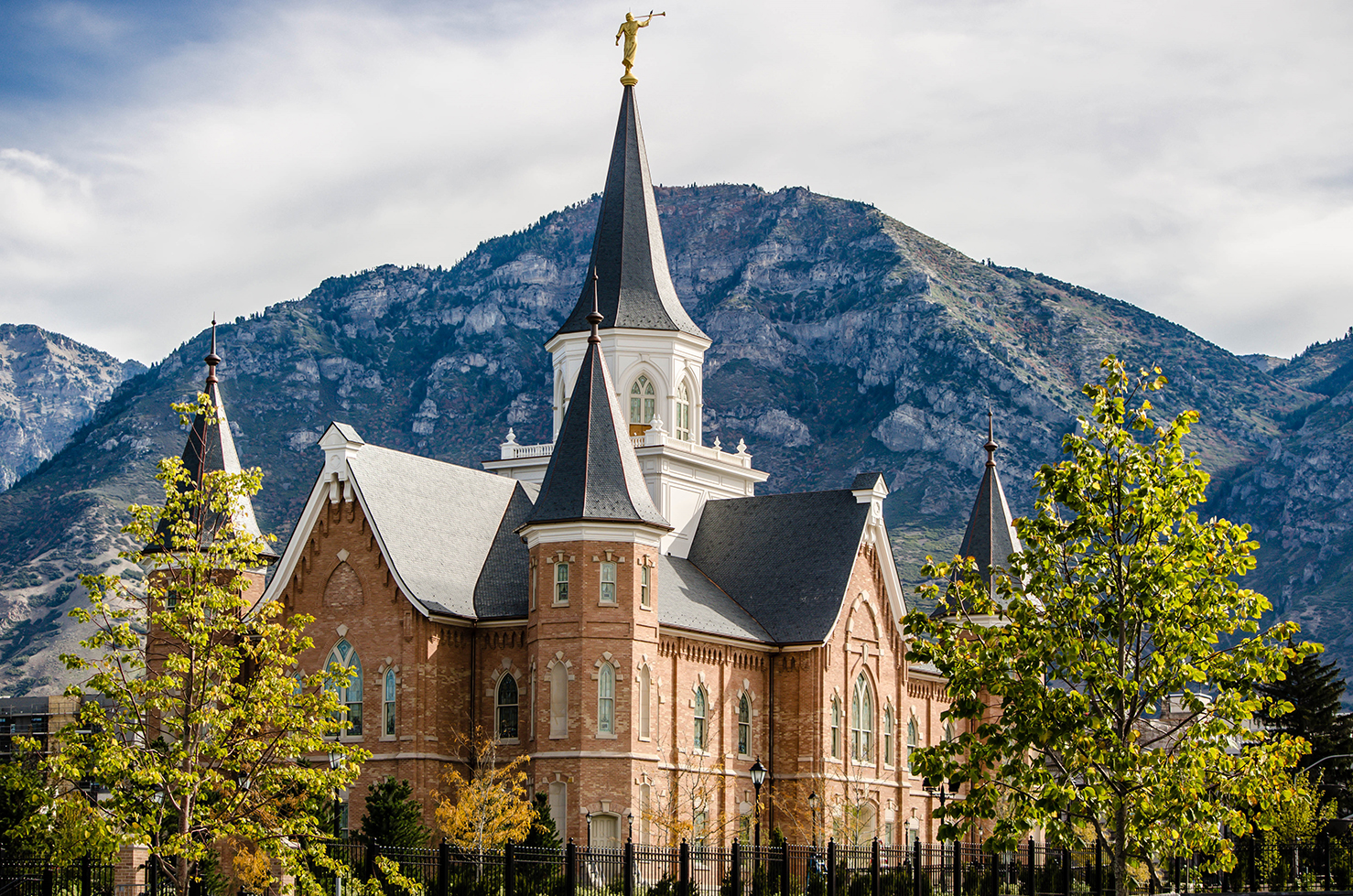
Our daughter Annie is getting married tomorrow in the Provo City Center Temple in Utah.

            In December 2010, a fire destroyed all but the outer walls of the historic Provo Tabernacle.


The temple was constructed inside those walls and dedicated on March 20, 2016. Annie and Shawn will be married there less than three months later.                            

Jim’s cousin, Mark, and his wife, Lynne, are generously hosting us and helping tremendously with the preparations and reception, which will be at the Springville Art Museum. Cyrus Dallin, who sculpted the Angel Moroni on the main steeple of the Salt Lake City Temple as well as Appeal to the Great Spirit in front of the Boston Museum of Fine Art, was born and raised in Springville, Utah, south of Salt Lake City. Dallin spent his adult life in Arlington, MA, where he had a sculpture studio. We live about 4 miles away, both from his studio and the replica Angel Moroni statue on the Boston Temple.

Two years ago

The first week in June, 2014, our son Sam, a 10-out-of-10 HLA (Human Leukocyte Antigen) match and therefore David’s stem cell donor, takes a few days off work in Utah and spends them at Mass. General as they harvest stem cells. The procedure is much like a platelet donation: Sam sits quietly while a needle in a vein in his arm removes his whole blood. A machine separates out the stem cells (which can mature into any type of blood cell), and then Sam’s blood, sans stem cells, is returned into a vein in his other arm. They freeze the cells, to preserve them before the transplant. After the procedure, we meet for lunch at the food court at Mass. General.

The results of an echocardiogram explain why David walks slowly and bent over: he has the heart of an 80-year-old cardiology patient: the chemo drug, daunirubicin, damaged his heart badly. In addition, he could have died from the C-diff (clostridium difficile) infection he contracted in the hospital. As it was, he had emergency surgery to remove his large intestine. Clearly hospitals are dangerous places for him.

So, when his transplant doctor, Dr. Yi-Bin Chen, asks David if he’d like to go home the day after the transplant, of course David lights up. After my initial elation, I’m more subdued: coming right home feel like the booby prize. They won’t administer radiation or more chemo to eradicate most of the leukemic cells before the transplant, as is the standard procedure. That treatment might just kill him. And since he won’t be badly weakened by any additional chemo and radiation, he can immediately go home, a much safer place than the hospital has been for him. There are no easy decisions.

Wednesday, June 1, 2016

Memorial Days

Memorial Day Weekend 2016
We spend four days in Charleston, South Carolina, visiting Jim’s sister’s family (John and Mary, Sierra and Jenna) and taking in the Spoleto USA Music Festival while getting to know Charleston with its charming 'single houses' with side porch piazzas, its bay views, and its picturesque streets.


The first landmark driving into Charleston is the airport exit sign, which reminds us both that the last time we saw David healthy was when we dropped him off at said airport on January 2, 2014, after a post-Christmas visit to John and Mary. At the curb Jim signed David’s copy of the Family Letters 2006-2011 book Jim wrote. Just a prosaic airport drop-off. David was headed back to Fort Hood Army Base in Texas. I didn’t know I was supposed to watch him carefully, soak in that last bit of Army -Medic health.
We soak up three days of concerts and theater in downtown Charleston: modern dance, chamber music, orchestra, choir, and The Importance of Being Earnest. Monday we walk about a mile to a Westminster Choir concert at the Cathedral of St. Luke and St. Paul. On the way back to downtown it rains and I walk under a large colorful umbrella. Stopped at a traffic light, a man taps my arm and points down at the puddley sidewalk. A small American flag on a stick lies abandoned on the ground. I don’t know if he thinks I had carelessly dropped it, but out of respect I pick it up: my private Memorial Day observance. I hadn’t planned ahead to decorate David’s grave, but that evening our Bishop emails a picture of his thoughtful observance:


Memorial Day Weekend 2014
Four days after I pack my carry-on bag and camp out in David’s hospital room, we're medevacked to Hanscom Airport near Boston (and four miles from our house). After the excitement of the leukemia remission news and the dramatic airlift, we discover that the doctors at MGH (Massachusetts General Hospital) have no intention of doing anything over the Memorial Day weekend. It's a let-down.
But the important thing is that David is home and on his way towards a bone marrow transplant.

Saturday, August 1, 2015

Quiet Saturday at Home


            Well, the actual discharge time from Lunder 1024 on Thursday was 4 p.m., five hours past the 11 a.m. stated departure time. While we waited at the hospital, David’s new hospice nurse, Luis, was waiting in our driveway along with the social worker, Robert. Their shifts ended, so they went home before we arrived at our house. Martin, the night nurse, came instead, and around 9 p.m. a driver from Pelham Pharmacy dropped off the IV-morphine cassettes.
            Luis and Robert returned Friday morning. Luis watched me set up the one liter bag of dextrose water to David’s IV line. I was pretty nervous; it went well, slow but well. The infusion nurse who trained me at Lunder on Thursday, gave me a ‘cheat sheet’ with step-by-step instructions, which I used. I assured Luis I could do the disconnection when the four-hour infusion was complete.
            This morning the weekend nurse, Lisa, arrived at 1 p.m. to walk me through the set-up. I had spent over an hour typing the instructions into a spreadsheet to help me understand the steps and rehearse them in my mind. The actual set-up went well, but I asked Lisa to come by Sunday just to bolster my confidence and refine my technique. After she left I spent more time fine-tuning my spreadsheet, printing it, and putting it in a sheet protector. (I love sheet protectors.)

            Flash back to Monday (or was it Tuesday?), which feels like two weeks ago: my friends Sarah and Birgit came over and helped me dust and sweep the house, and prepare the dining room for the delivery of the hospital bed and equipment. The old oak table that I grew up with has removable leaves; we took them out and changed the rectangular table with seating for 12 to a small square table. All the leaves and the dining room chairs made their way down to the basement for safe keeping.
Wednesday we took delivery on the hospital bed, tray table, oxygen concentrator, portable oxygen tanks, and a suction machine (to clear throat secretions). Thursday we arrived home around 5 p.m.
            Turning the dining room into David’s bedroom, complete with hospital bed and all the trimmings, makes hospice very much more real. It’s sobering. He appreciates not having to climb the stairs to his bedroom each evening. He can go to the kitchen to microwave warm milk or sit on the couch in the family room and watch a movie with us.
            R’el was able to take Thursday and Friday off and brought two-year-old Andrew up from the Bronx for a four-day visit. Andrew is a brave little soldier and has handled his first overnight away from home and his parents with aplomb. Andrew’s mom Xiomara is nine months pregnant, so she and Peter have to stay at home close to the hospital until after the baby is born. David enjoys seeing his curly-haired nephew. Matt flew in late Friday night; he’ll stay till Monday.
            It’s been a quiet day. David still has a cough, and has very little energy, but he’s home and fairly comfortable. He’s reading Woman Warrior by Maxine Hong Kingston (our current family book group selection) and The ubiquitous Economist.

            Thus ends Day Two of hospice.

Thursday, July 30, 2015

Discharged from Lunder 1024


We’re at Lunder 1024. David is resting, I am on my laptop (obviously). We’re waiting for the infusion person to come and set up David’s morphine pump in preparation for his discharge, which was scheduled for 11 a.m. It’s 1:53 p.m. now. ‘Hospital time’ is the mode of the day.

            During this past hospitalization a new plan went into effect. We changed to Good Shepherd Hospice. Since David’s is an unusual case, being 27 years old rather than 70 or 80 or 90, they will allow him to keep receiving active treatment at Cox to keep the leukemia at bay. Mostly that means platelets to avoid uncontrollable bleeding and hydroxyurea, which slows the growth of the leukemic white blood cells. So, we’ll continue the twice-weekly appointments, just like we’ve had for most of the past 14 months. It’s become a familiar drill: blood draw, complete blood count, including percentage blasts (the leukemic cells) and absolute neutrophils (the infection-fighting white blood cells; David’s counts has been zero for months.), possibly transfusions of platelets and red blood cells, then a converation and check-up with either Dr. Fathi or one of the nurse practioners, Judy Foster or Meghan Bergeron.

            Our hope is that David can hold on until Annie returns from China on August 10. Through the miracle of technology she is able to video-call David and will do that in the interim. Of course, as has been the case for over a year, we can’t predict from day-to-day what will happen. That’s true for all of us, really, but the probability of death is much higher for David.

            I feel calm at the moment. I’m a little nervous about training on all the treatments. As I learned from a social worker back in December, when David’s white blood cell count rose to an alarming 95, hospice is not what most people picture: 90% of the care is done by the family care-givers. The hospice personnel are on call 24/7 by phone and in an emergency can talk us through whatever we need to do until the triage nurse arrives, which should be within an hour, but the immediate crisis, if it comes, will be ours to deal with initially. I’ve had eight months to digest that information; I’m as ready as I can be.

Home again, home again, jiggetty jog.