
Two Years Ago
Tuesday, 9 July 2014
Day 22 of the stem cell transplant
David’s white blood cell count is down to 1.9 (reference range is 4.5 to 11), but the nurse practitioner isn’t concerned; fluctuations are to be expected. She does another bone marrow biopsy: David’s fifth. It goes better than the fourth, which David described to R’el as “the worst pain in America”.
And so we wait. Seventy-eight days of quarantine to go.
Tuesday, 12 July 2016
11 months since David's death
I take the T into Kendall Square and have a basil limeade with a new friend. I plan to take the T back, but decide to walk to the Harvard Square T station instead. Before I get there I decide to walk farther, to Porter. Before I get there, Alewife Station becomes my new goal. At the firehouse on Garden St, I bear left. Wrong! Instead of Alewife I end up near the Fresh Pond rotary. Cutting through the mall parking lot I take a steep dusty slope to cross over some railroad tracks. The extra sweat drips right into my eyes. They sting intensely for several minutes and it is an effort to keep them open. I pass by the station, having now walked four and a half miles, and resolve to continue to Arlington Center. Once there I eschew one bus stop after another and continue on to Lexington. I stay on the bike path for a mile past our house in order to complete a half marathon: 13.1 miles.
A half marathon on the eleventh monthiversary of David’s death. A tribute to his life.
Sunday, 3 July 2016
My friend, Deb, sits next to me in Relief Society and says she finds her body needs 9 hours of sleep to heal. (She had hip surgery 7 ½ months ago.) She expresses mild frustration at that, but says it is what it is.
So, am I taking my body’s cue on healing as I sleep without an alarm or am I being lazy and self-indulgent? For today I’m going to go with the healing theory.
I return home from my three week vacation on Wednesday, June 30. Next day I’m ambitious, but by the end of the day frantic to tears with what I haven’t accomplished. Friday, my therapist guides me to realize that I have put my grief on hold for the three weeks and now yet another day with my overly-ambitious reentry plan.
I want to mourn. I’m scared to mourn. I’m in a more relaxed, calm place than eleven months ago; I fear going back into that very sad, helpless, painful place. The tears spring up while reading my current grief book: Rare Bird, by Anna Whiston-Donaldson. I feel relief in the tears.
My experience with Rare Bird is similar to my experience with An Unquiet Mind by Kay Redfield Jamison (a bipolar memoir: I collect them). Neither woman’s biography is anything like mine, but there is a fundamental resonance.
At eleven months into this, reading Anna’s description of the early days after the loss of her son helps me process mine.
Thursday, 7 July 2016
I’ve decided to take July and August off. What does that mean? I’m not even sure; I’ll discover that day-by-day. What I’m looking for is the expansiveness in my life that I’ve felt in the last four days. The luxury of reading and writing, of being comfortable spending time, hours of it, nurturing my creativity. I want to take a break and really experience the grief in this last month before David’s first death anniversary. I want to give myself permission to grieve, to feel, to move more slowly and live more deliberately.
Friday, 8 July 2016
What does healthy grief feel like? In Rare Bird, Anna Whitston-Donaldson suggests leaning towards grief rather than away from it.
Saturday, 9 July 2016
As I cook for our weekly Sunday supper (we usually have about twenty people here), I listen, for about the twentieth time, to the second act of the new Broadway musical Hamilton. When the Hamiltons’ son, Phillip, dies and the company sings “Going Through the Unimaginable”, I cry every time. Grief at losing our son. Grief at losing a young adult son, cutting off what could have been a long and bright future.
I listen to the CD twice more. The third time, I move from the kitchen and sit in the family room, letting my body shake with sobs.
Is it wrong for me to play that song over and over? In a month we’ll experience the difficult first anniversary of his death. I want those feelings out in the open, to face them, embrace them. It’s an internal battle for me. I’m the one who is still expecting me to be ‘over it’ and ‘stop wallowing’ by the first year mark. Lean toward it, Mary.
Wednesday, July 13, 2016

Tuesday, July 5, 2016
Dish Towels
Two Years Ago
On Day 15 of David’s stem cell transplant we see Dr. Chen. It is all good news: David’s white blood cell counts are 9.9, well within the reference range of 4.5 to 11. His red cell counts remain a bit low, but are holding steady. Next Tuesday David will see Jess Driscoll, the nurse practitioner, a sign that he is doing well and doesn’t require Dr. Chen’s constant attention
David moves slowly and gets tired easily, but he is able to move around the house, make himself a sandwich, go for short walks, and be home alone.
July 5, 2016
Folding clothes on my first laundry day since returning from the Northwest six days ago. The last day of my vacation I did laundry at Michelle’s and David’s house, thus avoiding the discouraging ritual of spending the first day back home doing laundry. Unpacking and resuming household duties is emotionally draining enough.
I reach to fold the ‘new’ dish towels and realize they are two years old. I bought a large package of them, and a package of dish cloths, in May, 2014, to minimize the use of paper towels in my super-clean kitchen by using a fresh cloth towel every day.
Handling the dish towels doesn’t make me cry. Reading On Loss and Living Onward does. I didn’t take it with me on my three week western jaunt. It’s on my Kindle, so that’s no excuse. I consciously didn’t read any grief books; I wanted to take a breather. Now I’m back.
Grief is a geat leveler. There is no highroad out.Anne Morrow Lindbergh, Hour of Gold, Hour of Lead
Courage is a first step, but simply to bear the blow bravely is not enough. Stoicism is courageous, but it is only a halfway house on the long road. It is a shield, permissible for a short time only. In the end, one has to discard shields and remain open and vulnerable. Otherwise, scar tissue will seal off the wound and no growth will follow. To grow, to be reborn, one must remain vulnerable—open to love but also hideously open to the possibility of more suffering.
Tuesday, June 28, 2016
Blithely Passing Gas Stations
Two years ago, day thirteen
Our sister-in-law, Michelle and her two youngest: Brigham and Charlie, visit June 29th. David lived with them, in Wayne, PA, a suburb of Philly, when he volunteered for City Year, before his mission. We really appreciate them coming for one last visit before the big move to Washington State. We sit on our deck, soaking in the perfect New England evening.
2016
We spend the Johnston family reunion with Jim’s family, including Michelle, Brig, and Charlie. I stay the next week to visit two nieces, a Hazen cousin, and a cousin of my dad, (my first cousin, once removed, if you’re genealogically-minded).
Sunday, June 26th, after church and lunch, I head for Moscow, Idaho, to stay with Jenn’s sister Michelle, her husband, Will, and little 20-month-old Chloe (a.k.a. Clover.) It’s an inspiring drive over the evergreen Cascade Mountains and then 100 miles of desert: sage brush and the occasional stand of sage-colored trees. Taking Washington State Route 26 eastbound, I pass, in blissful ignorance, a gas station at mile 2 and spend mile 50 through 102 wondering if AAA works in the wilds of central Washington. There's a sign for gasoline around mile 50, but it states the hours: Monday through Saturday. I imagine pulling in and sleeping in the car till Monday morning. Around mile 102, I spot a white minivan with a young mother tending her infant at a primitive rest stop (No water, just two outhouses). “Do you live around here?” “Well, in Pullman.” “Is there a gas station open anywhere near?” “Yes, in Colfax, if you have a credit or debit card." When I pull into it, I’ve still got a quarter tankful of gas, but I’m relieved to fill it up. Colfax, Washington is just 25 miles from Moscow, Idaho, but I'm taking no more chances.
Reminds me of our 1995 cross-country trip. (15,900 miles, 48 states, 1 Mexican state, and 3 Canadian provinces). In South Dakota I blithely pass a gas station; I still have several gallons of gas in the car. We drive through miles of sparsely populated reservation and I, silently stressing, try not to convey my ever-increasing anxiety to my six children (ages 4-14). Am I going to strand us all in the wilderness? I finally give up, turn the minivan and tent trailer around, backtrack, and roll into that same gas station, practically on fumes. East Coast assumptions can get you in trouble in the West.
Monday, June 27, 2016
Boring Days Then, Evergreen State Now
Two Years Ago
Starting June 17, the day after David’s stem cell transplant, I drive him to Cox, the outpatient leukemia clinic, twice a week. Each time, they draw blood, count his white and red blood cells, and his platelets (which have clotting agents to stop bleeding), and measure his blood level of tacrolimus, an immunosuppressive drug given to prevent David’s residual immune system from attacking Sam’s stem cells. At home, David injects himself with neupogen to boost those stem cells’ production.
2016
I spend a lovely two days with Kathleen in Ballard, Washington, which was originally an independent town (much like Hyde Park, south of Chicago). Now it’s northwestern Seattle. It has a charming downtown and we lunch at an excellent Mexican restaurant. I buy bandaids for my chin.
Thursday, June 16th, I pick up Peter, Xiomara, Andrew, and little Victoria, at the SEA-TAC airport and head for the rental vacation house on Lake Sawyer in Black Diamond. Friday we visit the Museum of Glass in Tacoma and tour the Seattle Underground on Saturday. There are some cloudy days, but that’s what we expect in the Northwest, right? We take turns cooking for 26: I ambitiously plan to make a Cook's Illustrated chicken parmesan recipe; it goes well. Since I cut my chin in Sacramento, I don’t swim in the lake.
After the reunion, Jim goes back to work in Lexington while I stay in Sammamish to visit relatives. I head back to Tacoma to see my niece, Jenn, where we visit a playground, for her two boys, and then a sandwich shop for lunch. Nine-year-old Paxton blows me away with his knowledge of the Revolutionary War. He even knows about the Fortification of Dorchester Heights, when Henry Knox dragged 60 tons of cannons and other guns from Ticonderoga over 200 miles to Dorchester Heights, overlooking the Boston Harbor and the occupying British army and navy.
Friday, June 24th, after walking David's and Michelle's dog, Bo, I head for the eastern shore of Lake Sammamish and walk 13.82 miles in 4 hours and 8 minutes. My half-marathon (13.1 miles) time was 3:55.
Monday, June 20, 2016
Stem Cell Transplant Then
Two Years Ago
Sam flies back to Utah the day after David’s transplant, after we have watched the anticlimactic delivery of his stem cells via IV to David. Sam has a job for the summer with a small startup company. R’el graduates from her psychiatry residency at the University of Connecticut Medical Center in Farmington, just west of Hartford. We attend a wedding reception for Ryan and Mie at the Old Manse, which Nathaniel Hawthorne and his new bride Sophia Amelia Peabody rented when they were first married in 1842.
Day One, Day Two, Day Three of the hundred day post-transplant quarantine. I become a “Kitchen Nazi”. I decline offers of meals from loving friends. I focus a lot of energy on keeping the kitchen clean and the food safe, measuring the temperature of all meat (even cold cuts) and cooked food (165° or above), soaking the washed dishes in bleach, and spraying down the kitchen counters with a bleach solution frequently. It’s what I can do to combat the helplessness.
2016
The wedding of Annie and Shawn, which I announced in last week’s post, happens in the Provo City Center Temple. My wedding hope for them is expressed by the letter Nathaniel Hawthorne wrote to his sister Louisa, shortly after he and Sophia married:
“We are as happy as people can be, without making themselves ridiculous, and might be even happier; but, as a matter of taste, we choose to stop short at this point.” A year later, Nathaniel writes to his wife, Sophia, “We were never so happy as now—never such wide capacity for happiness, yet overflowing with all that the day and every moment brings to us. Methinks this birth-day of our married life is like a cape, which we have now doubled and find a more infinite ocean of love stretching out before us.”
Two days after Annie’s and Shawn’s wedding Jim drops me off at the Salt Lake City Amtrak train tracks at 10 p.m. I wander around, looking for the promised waiting area, and finally stop in at the Greyhound bus station, where a security guard directs me to the small Amtrak waiting room.
The California Zephyr is two hours late. At 2 a.m. I board and settle into my seat, which is a lot roomier than economy airplane seats. No one sits next to me, so I can spread out a little. I sleep about five hours, waking up several times. When I wake up the sun is well up; my sleep mask is very effective. A group of Mennonites are behind me in the coach car; they speak a language that sounds Scandinavian. At Winnemucca, Nevada, I have time to step out on the platform; a Mennonite woman and man run to the end of the long, concrete platform. The conductor is annoyed, thinking they will delay the train. Nearly half the passengers on the platform smoke. Back on the train many of the passengers sleep through the stop. I spend several hours in the observation car and hear the story of the ill-fated Donner party as we pass Donner Lake in the Sierra Nevada Mountains.

We arrive in Sacramento, California, around 4:30 p.m., about two hours late. I cut across a parking lot to get to Old Sacramento. I trip over a parking berm and cut my chin and scrape my knees—blood everywhere. Dazed, I stumble into a restaurant and a helpful bartender rescues me with a bunch of paper napkins to staunch the bleeding. I wander the wooden sidewalks, past shops of old-time photographers, ice cream shops and tattoo parlors, and a riverboat dock, all the while firmly pressing the napkins to my chin. The man at the hot dog storefront notices my plight and offers two small bandaids. Then I walk to the California state capitol and enjoy the botanical garden.


At 1 a.m. I board the Seattle-bound Coast Starlight.

Next morning I head to the observation car at 7:00 a.m. I spend the day typing on my laptop and listening to a naturalist and a historian narrate our trip through Oregon and Washington. We stop on a siding in front of a bog and watch yellow-headed blackbirds dart among the rushes as a freight train passes us. Crater Lake is too far away to see, but there is fresh snow on the evergreens as we pass over the Cascade Mountains, which is delightful.
We arrive in Seattle an hour early and I take my first Uber ride, to my college friend’s, Kathleen’s, house. We talk late into the evening, as the room slowly darkens; we bask in our renewed friendship in the dusk, which lingers past 10 p.m.
Thursday, June 9, 2016
Wedding Plans
Our daughter Annie is getting married tomorrow in the Provo City Center Temple in Utah.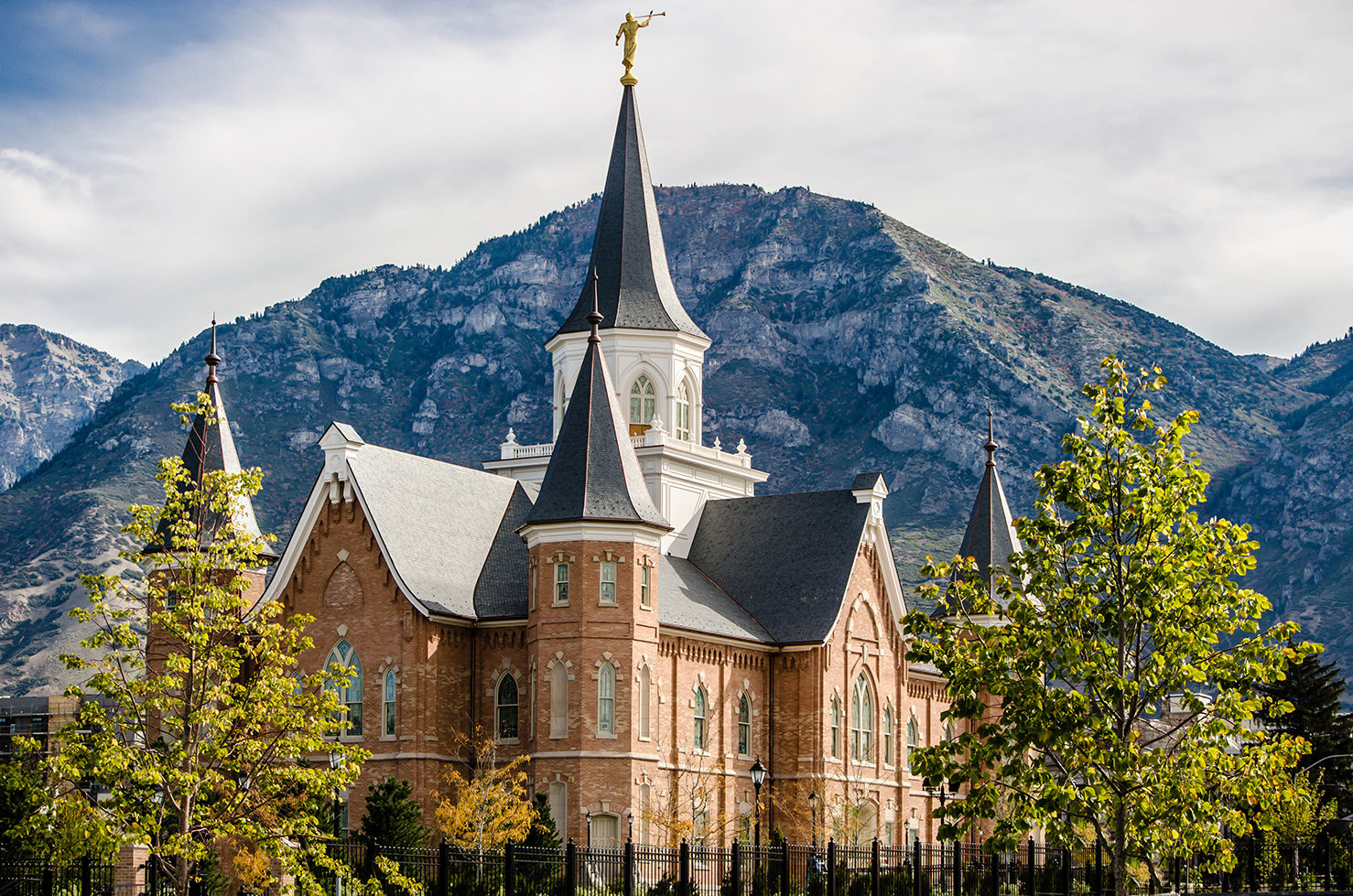
In December 2010, a fire destroyed all but the outer walls of the historic Provo Tabernacle.

The temple was constructed inside those walls and dedicated on March 20, 2016. Annie and Shawn will be married there less than three months later.
Jim’s cousin, Mark, and his wife, Lynne, are generously hosting us and helping tremendously with the preparations and reception, which will be at the Springville Art Museum. Cyrus Dallin, who sculpted the Angel Moroni on the main steeple of the Salt Lake City Temple as well as Appeal to the Great Spirit in front of the Boston Museum of Fine Art, was born and raised in Springville, Utah, south of Salt Lake City. Dallin spent his adult life in Arlington, MA, where he had a sculpture studio. We live about 4 miles away, both from his studio and the replica Angel Moroni statue on the Boston Temple.
Two years ago
The first week in June, 2014, our son Sam, a 10-out-of-10 HLA (Human Leukocyte Antigen) match and therefore David’s stem cell donor, takes a few days off work in Utah and spends them at Mass. General as they harvest stem cells. The procedure is much like a platelet donation: Sam sits quietly while a needle in a vein in his arm removes his whole blood. A machine separates out the stem cells (which can mature into any type of blood cell), and then Sam’s blood, sans stem cells, is returned into a vein in his other arm. They freeze the cells, to preserve them before the transplant. After the procedure, we meet for lunch at the food court at Mass. General.
The results of an echocardiogram explain why David walks slowly and bent over: he has the heart of an 80-year-old cardiology patient: the chemo drug, daunirubicin, damaged his heart badly. In addition, he could have died from the C-diff (clostridium difficile) infection he contracted in the hospital. As it was, he had emergency surgery to remove his large intestine. Clearly hospitals are dangerous places for him.
So, when his transplant doctor, Dr. Yi-Bin Chen, asks David if he’d like to go home the day after the transplant, of course David lights up. After my initial elation, I’m more subdued: coming right home feel like the booby prize. They won’t administer radiation or more chemo to eradicate most of the leukemic cells before the transplant, as is the standard procedure. That treatment might just kill him. And since he won’t be badly weakened by any additional chemo and radiation, he can immediately go home, a much safer place than the hospital has been for him. There are no easy decisions.
In December 2010, a fire destroyed all but the outer walls of the historic Provo Tabernacle.
The temple was constructed inside those walls and dedicated on March 20, 2016. Annie and Shawn will be married there less than three months later.
Jim’s cousin, Mark, and his wife, Lynne, are generously hosting us and helping tremendously with the preparations and reception, which will be at the Springville Art Museum. Cyrus Dallin, who sculpted the Angel Moroni on the main steeple of the Salt Lake City Temple as well as Appeal to the Great Spirit in front of the Boston Museum of Fine Art, was born and raised in Springville, Utah, south of Salt Lake City. Dallin spent his adult life in Arlington, MA, where he had a sculpture studio. We live about 4 miles away, both from his studio and the replica Angel Moroni statue on the Boston Temple.
Two years ago
The first week in June, 2014, our son Sam, a 10-out-of-10 HLA (Human Leukocyte Antigen) match and therefore David’s stem cell donor, takes a few days off work in Utah and spends them at Mass. General as they harvest stem cells. The procedure is much like a platelet donation: Sam sits quietly while a needle in a vein in his arm removes his whole blood. A machine separates out the stem cells (which can mature into any type of blood cell), and then Sam’s blood, sans stem cells, is returned into a vein in his other arm. They freeze the cells, to preserve them before the transplant. After the procedure, we meet for lunch at the food court at Mass. General.
The results of an echocardiogram explain why David walks slowly and bent over: he has the heart of an 80-year-old cardiology patient: the chemo drug, daunirubicin, damaged his heart badly. In addition, he could have died from the C-diff (clostridium difficile) infection he contracted in the hospital. As it was, he had emergency surgery to remove his large intestine. Clearly hospitals are dangerous places for him.
So, when his transplant doctor, Dr. Yi-Bin Chen, asks David if he’d like to go home the day after the transplant, of course David lights up. After my initial elation, I’m more subdued: coming right home feel like the booby prize. They won’t administer radiation or more chemo to eradicate most of the leukemic cells before the transplant, as is the standard procedure. That treatment might just kill him. And since he won’t be badly weakened by any additional chemo and radiation, he can immediately go home, a much safer place than the hospital has been for him. There are no easy decisions.
Wednesday, June 1, 2016
Memorial Days
Memorial Day Weekend 2016
We spend four days in Charleston, South Carolina, visiting Jim’s sister’s family (John and Mary, Sierra and Jenna) and taking in the Spoleto USA Music Festival while getting to know Charleston with its charming 'single houses' with side porch piazzas, its bay views, and its picturesque streets.

The first landmark driving into Charleston is the airport exit sign, which reminds us both that the last time we saw David healthy was when we dropped him off at said airport on January 2, 2014, after a post-Christmas visit to John and Mary. At the curb Jim signed David’s copy of the Family Letters 2006-2011 book Jim wrote. Just a prosaic airport drop-off. David was headed back to Fort Hood Army Base in Texas. I didn’t know I was supposed to watch him carefully, soak in that last bit of Army -Medic health.
We soak up three days of concerts and theater in downtown Charleston: modern dance, chamber music, orchestra, choir, and The Importance of Being Earnest. Monday we walk about a mile to a Westminster Choir concert at the Cathedral of St. Luke and St. Paul. On the way back to downtown it rains and I walk under a large colorful umbrella. Stopped at a traffic light, a man taps my arm and points down at the puddley sidewalk. A small American flag on a stick lies abandoned on the ground. I don’t know if he thinks I had carelessly dropped it, but out of respect I pick it up: my private Memorial Day observance. I hadn’t planned ahead to decorate David’s grave, but that evening our Bishop emails a picture of his thoughtful observance:

Memorial Day Weekend 2014
Four days after I pack my carry-on bag and camp out in David’s hospital room, we're medevacked to Hanscom Airport near Boston (and four miles from our house). After the excitement of the leukemia remission news and the dramatic airlift, we discover that the doctors at MGH (Massachusetts General Hospital) have no intention of doing anything over the Memorial Day weekend. It's a let-down.
But the important thing is that David is home and on his way towards a bone marrow transplant.
We spend four days in Charleston, South Carolina, visiting Jim’s sister’s family (John and Mary, Sierra and Jenna) and taking in the Spoleto USA Music Festival while getting to know Charleston with its charming 'single houses' with side porch piazzas, its bay views, and its picturesque streets.
The first landmark driving into Charleston is the airport exit sign, which reminds us both that the last time we saw David healthy was when we dropped him off at said airport on January 2, 2014, after a post-Christmas visit to John and Mary. At the curb Jim signed David’s copy of the Family Letters 2006-2011 book Jim wrote. Just a prosaic airport drop-off. David was headed back to Fort Hood Army Base in Texas. I didn’t know I was supposed to watch him carefully, soak in that last bit of Army -Medic health.
We soak up three days of concerts and theater in downtown Charleston: modern dance, chamber music, orchestra, choir, and The Importance of Being Earnest. Monday we walk about a mile to a Westminster Choir concert at the Cathedral of St. Luke and St. Paul. On the way back to downtown it rains and I walk under a large colorful umbrella. Stopped at a traffic light, a man taps my arm and points down at the puddley sidewalk. A small American flag on a stick lies abandoned on the ground. I don’t know if he thinks I had carelessly dropped it, but out of respect I pick it up: my private Memorial Day observance. I hadn’t planned ahead to decorate David’s grave, but that evening our Bishop emails a picture of his thoughtful observance:

Memorial Day Weekend 2014
Four days after I pack my carry-on bag and camp out in David’s hospital room, we're medevacked to Hanscom Airport near Boston (and four miles from our house). After the excitement of the leukemia remission news and the dramatic airlift, we discover that the doctors at MGH (Massachusetts General Hospital) have no intention of doing anything over the Memorial Day weekend. It's a let-down.
But the important thing is that David is home and on his way towards a bone marrow transplant.
Subscribe to:
Posts (Atom)

 Posts

